


Michel Aurrand-Lions
Bone marrow niche organization in normal and pathological haematopoiesis
CHAIRS : Sandrina Kinet, Peng Ji
08:10 – 08:35 Invited speaker: Julia Christine Gutjahr (Switzerland)
Multiple Facets of CXCR4 Signaling During Erythropoiesis
08:35 – 09:00 Invited speaker: Pedro Gonzalez-Menendez (Spain)
The hypusine pathway at the crossroads of protein synthesis and erythroid differentiation in aging
09:00 – 09:15 Arthur Schott (France)
Metabolic rewiring of the serine-glycine axis sustains erythropoiesis upon GLYT1 blockade09:15 – 09:30 Simona Maria Di Modica (Italy)
Erythroid metabolic activation shapes systemic glucose levels09:30 – 09:45 Jade Serano (France)
A single-cell metabolic atlas of human erythropoiesis identifies a bioenergetic switch and a critical window of mitochondrial vulnerability09:45 – 10:00 Axel Joly (France)
Cysteine-regulated U34 tRNA thiolation defines a novel epitranscriptomic control of human erythroid differentiation
CHAIRS : Frédérique Verdier, Auria Godard
10:30 – 10:55 Invited speaker: Olivier Hermine (France)
VEXAS anemia is a mosaic erythroblastopenia
10:55 – 11:20 Invited speaker: Rami Khoriaty (United States)
Congenital Dyserythropoietic Anemia Type II: From Molecular Pathogenesis to Therapeutic Discovery
11:20 – 11:35 Loane Schertzer (The Netherlands)
Elucidating the involvement of ion channels and transporters during erythropoiesis
11:35 – 11:50 Robert Seute (France)
Role of KCNN4 in erythroid differentiation
11:50 – 12:05 Valentina Lefkaditi (The Netherlands)
CRISPR/Cas9-mediated generation of IKZF1 and WIZ knockout HUDEP-2 clonal cell lines for the investigation of their role in human erythropoiesis and gamma-globin expression
12:05 – 12:20 Mariano Ostuni (France)
Hemin delays early erythroid differentiation and induces mitochondrial clearance via LRP1-mediated ERK signaling
12:20 - 12:35 Olivier Hermine (France)
CHAIRS : Deena Iskander, Loane Schertzer
14:00 – 14:25 Invited speaker: Peng Ji (United States)
Erythroblastic islands in physiology and pathology14:25 – 14:50 Invited speaker: Lars Hanssen (UK)
Mechanisms of disordered erythropoiesis in Diamond-Blackfan Anaemia Syndrome14:50 – 15:05 Marije Bartels (The Netherlands)
iPSC models are excellent tools to study impaired erythropoiesis and molecular defects in Diamond-Blackfan anemia syndrome (DBAS)15:05 – 15:20 Smritikana Dutta (India)
Heme tunes proteostasis and oxidative stress signaling through the P. falciparum artemisinin determinant PfKelch1315:20 – 15:35 Mélanie Franco (France)
Lipid overload of red blood cells, spleen function and congestion are key determinants of splenomegaly in Gaucher disease15:35 – 15:50 Elena Martinez Balsalobre (Spain)
Modulation of NLRP1 inflammasome as a strategy in congenital sideroblastic anemia
CHAIRS : Camille Roussel, Tim Satchwell
08:10 – 08:35 Invited speaker: Pascal Amireault (France)
Storage alters a distinct subpopulation of morphologically-altered RBCs targeted for clearance after transfusion
08:35 – 09:00 Invited speaker: Emile van den Akker (The Netherlands)
Metabolomics Guided Optimization of iPSCDerived HbFRBCs in bioreactors for a Developmentally Matched Transfusion Product
09:00 – 09:15 Syed Qadri (Canada)
Effect of prolonged storage on red blood cell recovery in murine polymicrobial sepsis09:15 – 09:30 Robin van Bruggen (The Netherlands)
Duffy antigen receptor for chemokines (DARC) as novel signalling hub in red blood cells09:30 – 09:45 Sandy Peltier (France)
Proteasome inhibition drives RBC alterations during storage and under post-transfusion-like conditions09:45 – 10:00 Coen Vliegen (The Netherlands)
Investigating subsets of red blood cells and their functional difference
CHAIRS : Richard van Wijk, Hélène Guizouarn
10:30 – 10:55 Invited speaker: Paola Bianchi (Italy)
Breaking the Balance: Red Blood Cell Instability in Hereditary Spherocytosis and Beyond10:55 – 11:20 Invited speaker: Loïc Garçon (France)
Expression and function of PIEZO1 during human erythropoiesis11:20 – 11:35 Guillaume Bouyer (France)
PIEZO1-driven echinocytosis in red blood cells is independent of calcium and water fluxes11:35 – 11:50 Reetta Penttinen (Germany)
Investigation of pharmacological PIEZO1 modulators using automated patch-clamp11:50 – 12:05 Bita Asghariastanehei (France)
Red blood cell PIEZO1 activation drives faster coagulation and structural alterations in blood clots through red blood cell deformability impairment12:05 – 12:20 Titine Ruiter (The Netherlands)
Ex vivo glucose tracing in red blood cells from patients with hereditary xerocytosis reveals enhanced glycolytic flux
CHAIRS: Stéphane Egée, Wassim El Nemer
12:20 - 12:35 Olek Shestakov, OXYDIAL
OxyDial EQ: a rapid, micro-volume, calibration-free platform for full oxygen equilibrium curve measurement in red cell research and hemoglobinopathy care
12:35 - 12:50 Atze van der Pol, RR MECHATRONICS
Oxidantscan: ektacytometry to study the effects of oxidative stress on RBC deformability
12:50 - 13:00 Annie Viallat, ICOVELL
DYNARED: Point-of-Care Assessment of Red Blood Cell Deformability for Sepsis Detection
CHAIRS : Lars Kaestner, Elie Nader
14:30 – 14:55 Invited speaker: Simon Mendez (France)
Can complete blood counts measure red blood cell mechanics?14:55 – 15:20 Invited speaker: Stephan Geckle (Germany)
Modeling the red cell in silico15:20 – 15:35 Manouk Abkarian (France)
Enhanced rheological and molecular transport in microcirculatory-scale red cell suspension flows15:35 – 15:50 Jiahai Shi (Singapore)
ESCRT-mediated scission of stress-induced membrane protrusions drives protective RBC vesiculation15:50 – 16:05 Min Qiao (Germany)
Superresolution microscopy of cytoskeleton elements in red blood cells from neuroacanthocytosis syndrome patients16:05 – 16:20 Angelica Niño Hernandez (France)
Bilayer-cytoskeleton mechanical coupling regulates PIEZO1 activity and red blood cell deformability
CHAIRS : Claudia Bernecker, Emile van den Akker
08:10 – 08:35 Invited speaker: Alessandra Balduini (Italy)
3D Silk-Based Bone Marrow Models Identify Autophagy As a Critical Mechanism in Red Blood Cell Production08:35 – 09:00 Invited speaker: Isabel Dorn (Austria)
Self-organized hemanoids derived from human iPSCs provide a niche generating definitive extraembryonic hematopoiesis09:00 – 09:15 Tobias Schmidt (Austria)
Investigating the terminal maturation of erythrocytes using a novel spleenoid culture09:15 – 09:30 Maria De Grandis (France)
Rebuilding human erythropoiesis in a 3D bone marrow organoid: microenvironmental control in health and disease09:30 – 09:45 Steven Akkaya (France)
Early-life hematopoietic alterations in sickle cell anemia09:45 – 10:00 Peifen Zhang (The Netherlands)
A novel XACT lncRNA transcript with functions transcending X-chromosome inactivation
CHAIRS : Maria De Grandis, Andreas Glenthøj
10:30 – 10:55 Invited speaker: Ana Bélen Pérez Oliva (Spain)
11:20 – 11:35 Marie Martin (France)
Hematocrit partially explains the hypercoagulable profile of sickle cell patients11:35 – 11:50 Kuntal Dey (Switzerland)
S-glutathionylation inhibits plasma membrane Ca2+ ATPase 4b activity in erythrocytes from healthy subjects and sickle cell patients11:50 – 12:05 Rezin Majied (The Netherlands)
Investigation of RBC dehydration in SCD-derived erythroid progenitor cell lines12:05 – 12:20 Julien Grenier (France)
Ineffective erythropoiesis reshapes erythroid niche in sickle cell disease
CHAIRS : Sara El Hoss, Rami Khoriaty
13:45 – 14:10 Invited speaker: Andreas Glenthøj (Denmark)
Whole‑genome sequencing and functional testing in clinical red cell diagnostics14:10 – 14:35 Invited speaker: Slimane Allali (France)
Innate immunity and inflammation during acute chest syndrome in sickle cell disease
14:35 – 14:50 Philippe Connes (France)
Increasing daily step counts improves physical fitness, reduces pain and arterial stiffness in sickle cell patients14:50 – 15:05 Nicolas Hebert (France)
Novel single red blood cell lifespan measurement assay through glycated hemoglobin assessment by flow cytometry15:05 – 15:20 Tingyue Li (The Netherlands)
Development of novel CELMoDs for reactivation of fetal hemoglobin expression15:20 – 15:35 Romain Carin (France)
Persisting elevation of total hemoglobin mass after altitude training in elite swimmers: a potential role of prolonged erythrocyte survival
Beyond the Disease: Patient Perspectives in Sickle Cell Disease and Thalassemia
Departure
8h Shuttles to Marseille Provence Airport and to Avignon TGV station
France
Pr Slimane Allali received his MD from the Paris Descartes Medical School in 2009 and his PhD in Hematology in 2019. He specialized in pediatrics, red blood cell diseases, and transfusion. He is at the head of the Reference Center for Red Cell Diseases/Sickle Cell Center at the Necker University Hospital, which follows 700 children and the «ROFSED» healthcare network for SCD children in the Parisian area (Therapeutic Education Unit for 700 children and families). Slimane Allali is a member of the Laboratory of Cellular and Molecular Mechanisms of Hematological Disorders and Therapeutical Implications (Imagine Institute, Inserm U1163, Paris University) and works with Pr Olivier Hermine and Dr Thiago Trovati Maciel on the role of innate immune cells in SCD. He coordinates clinical research programs, notably on innate immunity and inflammation in children with SCD.
France
Doctor Pascal Amireault obtained a PhD in Biomedical Sciences from Université de Montréal in 2005. He is currently a permanent full-time research scientist for INSERM and Associate Director of the “Tissue Biology of Red Blood Cells” laboratory at Necker hospital in Paris. His main research interest seeks to understand the red cell in vitro aging process during blood bank storage and its impact on the red cell post-transfusion fate in the recipient, including the identification of mechanisms determining red cell clearance by the spleen.
France
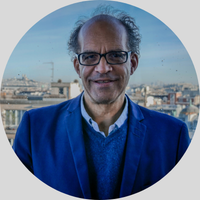
Dr. Michel AURRAND-LIONS PI Team "Leuko/stromal interactions in normal and pathological hematopoiesis", CRCM/UMR1068 Co-head of the IPC/CRCM Experimental Pathology facility (ICEP). Michel Aurrand-Lions, immunologist by training, made seminal contributions to our understanding of adhesive network regulating immune system and haematopoietic homeostasis. He is using mouse models to study bone marrow niche alterations occurring at early stages of acute myeloid leukemia development with single cell technologies and spatial transcriptomics. He reported ligand/receptor pairs involved in hematopoietic stem cell maintenance and identified new biomarkers for acute myeloid leukemia.
Italy
I have a broad background in hematology, with specific training and expertise in hematopoietic stem cell biology and the clinical aspects of platelet-related disorders. Before establishing my research group in 2007, I served as a staff physician in the Laboratory of Clinical Biochemistry at the IRCCS San Matteo Foundation and the University of Pavia, Italy. In 2005-2006, I was a Visiting Professor at Dana Farber Cancer Institute at Harvard Medical School. Since 2007, I have led a research group with a cross-institutional presence at the Department of Molecular Medicine at the University of Pavia and the Department of Biomedical Engineering at Tufts University, USA. The aim of our program is to integrate biological and bioengineering approaches to study hematopoiesis and the bone marrow microenvironment. My research is centered on understanding how various components of the bone marrow niche regulate platelet production. In 2011, I developed a bioengineered 3D model of human bone marrow using porous silk, which effectively mimics the physiology of the living bone marrow environment. This model was further refined in 2015 and 2017, allowing us to generate functional platelets ex vivo, offering potential clinical applications in blood component production. By 2021, we had demonstrated that this advanced tissue system could also be utilized as a novel tool for investigating pathological mechanisms in human platelet production and evaluating drug efficacy. In 2024, my group generated a silk bioink as new approach to mimic the viscosity of the native bone marrow environment. In 2025, we used a modified silk scaffold to generate red blood cells in vitro from human hematopoietic progenitor cells. Recently, our company, Silk4B, was incorporated with the support of the European Innovation Council.
Spain
Ana Belén Pérez Oliva is Principal Investigator at the Murcian Institute for Biosanitary Research in Murcia, Spain, where she has led her own research group since 2021. Recipient of the UNESCO–L’Oréal For Women in Science Award (2022), she currently leads national research projects and coordinates the European Commission project NANEMIAR. https://ocailab.imib.es.
Italy
Dr. Paola Bianchi - Fondation IRCCS Ca’ Granda Ospedale Maggiore Policlinico Milan – Italy Head Biologist at the Physiopathology of Anemias Unit, and Clinical Pathology Unit, Foundation IRCCS Ca’ Granda Ospedale Maggiore Policlinico Milan,Italy. Diagnosis and translational research on hemolytic anemias, both congenital and acquired and mieloproliferative disorders. She shared National and International projects on molecular characterization and genotype – phenotype correlation, and on the epigenetic factors that might influence clinical phenotype. By NGS approaches she identified new genes responsible for rare forms of hemolytic anemia. 2018-2023 Member of EHA Guidelines steering committee 2017-present ERN-EuroBloodNet (member of RADeep Steering Committee, Member of Guidelines committee) 2023- present Substitute representative European Reference Network for Fondazione IRCCS Ca’ Granda Ospedale Maggiore Policlinico 2020-present Member of Steering committee International PK deficiency Peak Registry, and Italian ISS PNH registry. 2022-2024 Co-chair of the European Red cell Society. 2025-pres. President of STEM Association (Studio e Trattamento del Malato Ematologico) Author and co-authors of more than 140 papers on peer-review international journals and of book chapters on rare anemias.
Austria
Current position (since 2018): Specialist in Transfusion Medicine & Head of the Research Unit Human Erythropoiesis, Department of Blood Group Serology and Transfusion Medicine, Medical University of Graz, Austria 1993 – 2001 Studies in Human Medicine at the Medical University of Lübeck, Germany 2001 – 2007 First clinical education (Transfusion Medicine) Institute for Immunology & Transfusion Medicine, Medical University Lübeck 2003 Doctoral degree (Dr. med.) from the Medical University of Lübeck, Germany 2007 – 2018 Second clinical education (Pediatrics) (University Hospital Lübeck (Germany), University Hospital Münster (Germany), University Hospital Graz (Austria) Research on human erythropoiesis 2009 – 2010 Université Pierre et Marie Curie, UMRS 938, Paris; France (Luc Douay), fellowship funded by the German Society for Transfusion Medicine (DGTI), „Ex vivo culturing of human red blood cells” 2011 – 2012 Max-Planck-Institute for Molecular Biomedicine, Cell & Developmental Biology, Münster, Germany (Hans Schöler) Fellowship funded by the Medical University Münster and the German Society for Transfusion Medicine (DGTI) „Ex vivo generation of red blood cells from human induced pluripotent stem cells“
France
Loïc Garçon is MD-PhD, hematologist, specialized in red blood cell inherited disorders and particularly in membranopathies. He is currently at the head of the Hematological Laboratory at Nice Universitary Hospital. He works as a clinical consultant at the Center of Reference for Red Blood Cell Disorders at Bicêtre Universitary Hospital since 2004. His research work focuses on normal and pathological erythropoiesis, and particularly in Hereditary Xerocytosis.
Germany
Stephan Gekle is a theoretical physicist heading the Biofluid Simulation and Modeling Group at the University of Bayreuth (Germany). He studied physics in Stuttgart (Germany) and Valladolid (Spain). In 2009, he obtained his PhD from the University of Twente (The Netherlands) on the splashing of water surfaces after the impact of an object. During his PostDoc between 2009 and 2012 at the Technical University of Munich (Germany) he became interested in biological physics questions. Since 2012, he is leading his own research group at the University of Bayreuth (Germany) with a particular focus on modeling of blood flow.
Denmark
Andreas Glenthøj, MD, PhD is Associate Professor and Head of the Danish Red Blood Cell Center at Copenhagen University Hospital, Denmark, a leading Nordic center for rare anemias. His work focuses on translating advanced diagnostics into targeted treatments, serving as PI on clinical and pre-clinical trials in hereditary anemias and iron metabolism, and chairing the Nordic Red Blood Cell Group.
Spain
Pedro Gonzalez-Menendez is a researcher with expertise in Hematopoiesis and cellular metabolism. After completing his postdoctoral training at the Institute of Molecular Genetics of Montpellier (IGMM), I established his independent research at the University of Oviedo, where he is currently Associate Professor. His research focuses on understanding whether systemic metabolic changes associated with aging affect erythropoiesis. He has authored 25 peer reviewed publications and have an h-index of 19.
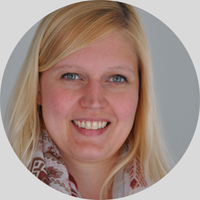
Switzerland
Dr. Julia Christine Gutjahr is an independent research group leader based in Switzerland with expertise in chemokine receptor biology and intracellular signaling.
She received her PhD training in the field of hematological malignancies, which shaped her interest in hematopoietic signaling pathways.
Her current work focuses on non-canonical and intracellular functions of the chemokine receptor CXCR4, including its roles in erythroid cells, bridging fundamental chemokine biology with questions relevant to hematopoiesis and disease.
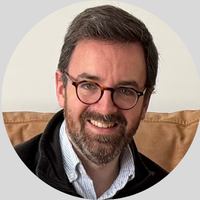
UK
Lars Hanssen is a Clinical Lecturer in Haematology at Imperial College London, with a clinical interest in paediatric haematology. He completed his DPhil at the University of Oxford in the laboratory of Professor Doug Higgs FRS, where his research focused on the regulation of the α-globin locus and the role of chromatin architecture in regulating tissue-specific gene expression during erythropoiesis. He is currently based in the group of Dr Deena Iskander at Imperial College London, where his work centres on the molecular basis underlying the erythropoietic defects observed in Diamond-Blackfan Anaemia Syndrome.
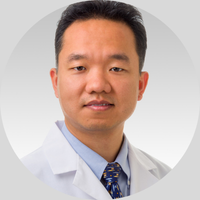
USA
Dr. Peng Ji is a physician-scientist and tenured Professor of Pathology at Northwestern University, where he serves as Vice Chair for Research and holds the Marie A. Fleming Research Professorship. His research focuses on the mechanisms of terminal erythropoiesis and how deregulated pathways in erythropoiesis contribute to myeloid diseases.
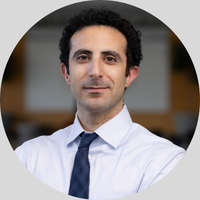
USA
Dr. Rami Khoriaty is Associate Professor of Internal Medicine, Associate Professor of Cell and Developmental Biology, and Section head of Classical Hematology, at the University of Michigan. He runs a lab focused on 1) studying normal and defective erythropoiesis, 2) dissecting the molecular mechanisms of rare erythroid disorders, and 3) studying the biology of globin switching. His work is funded by grants from the NIH and others.
France
Simon Mendez is a CNRS Researcher (HDR) at the Institute of Montpellier Alexander Grothendieck (IMAG), Université de Montpellier, France. His research bridges computational fluid dynamics (CFD) and biomedical engineering, focusing on the mechanics and dynamics of red blood cells (RBCs). He is the main developer of YALES2BIO, a CFD platform dedicated to the simulation of blood flows and biological fluid mechanics. His work spans fundamental studies of RBC rheology and membrane mechanics, as well as applied research on RBC diagnostics and medical imaging, including virtual Magnetic Resonance Imaging. He has led several projects on RBC deformation and transport, as well as on the modeling of thrombosis and COVID-19 aerosol transmission. His interdisciplinary approach combines advanced numerical methods, fluid–structure interaction, and close collaborations with experimental researchers to address challenges in hemorheology and biomedical applications. Simon Mendez is also co-director of the GDR MECABIO Santé and actively contributes to national and international research networks.
Erica Sparkenbaugh, PhD is an Assistant Professor in the Department of Pathology and Laboratory Medicine (DPLM) at the University of North Carolina at Chapel Hill. She joined the department in September 2024 and is also faculty in the Pathobiology and Translational Sciences (PBTS) PhD program and a member of the UNC Blood Research Center. Dr. Sparkenbaugh’s research focuses on the mechanisms linking coagulation, inflammation, and vascular complications in blood disorders such as sickle cell disease and β-thalassemia, with an emphasis on translational approaches and women’s health. She earned her BS in Biology from Allegheny College and her PhD in Pharmacology & Toxicology from Michigan State University, and completed postdoctoral training in hematology at UNC Chapel Hill. Her work bridges basic science and clinical relevance to advance understanding of thrombo-inflammatory disease processes.
The Netherlands
He graduated as a molecular biologist in 1999 (University of Groningen) and obtained his PhD in 2004 at Erasmus University Rotterdam on Epo and SCF signaling in erythropoiesis. After postdoctoral research in Paris and Bristol on transcriptional regulation and erythroblast differentiation, he became a principal investigator at Sanquin Research through an LSBR fellowship (2014). His work focuses on producing hematopoietic transplantation and transfusion products from iPSC and HSPC, including establishing an iPSC facility for disease modeling, gene editing, and advanced red blood cell production. His research supports donor‑independent cellular therapies, novel bioreactor‑based manufacturing methods, and clinical translation toward transfusing cultured RBCs into healthy volunteers as well as novel gene therapy curative modalities for inherited erythroid defects, like SCD or Thalassemia.